
It should have been called Doctor Who Regenerated
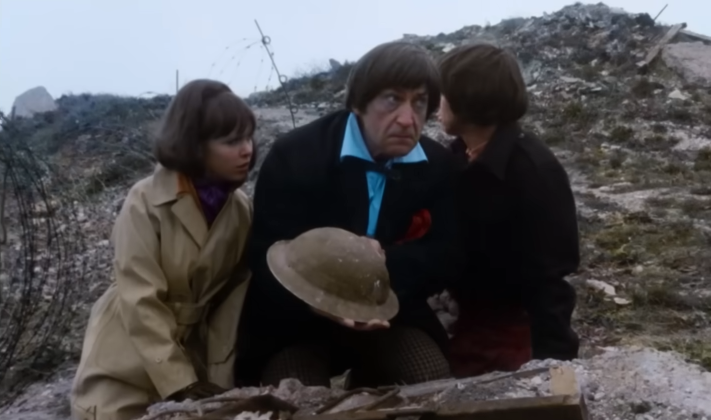
In the last couple of years, the BBC has begun colourising Classic Doctor Who serials from the 1960s and recutting them into short movies. They’ve done two so far. ‘The Daleks in Colour,’ released in 2023, colourised and recut William Hartnell’s second story, whilst ‘The War Games in Colour,’ released at the end of 2024, updated Patrick Troughton’s final serial. There is no word, at the time of writing, of a third colourisation.
I have a lot to say about these recuts, and a lot of thoughts on what they should do in future. I’ll admit to being somewhat critical of the output so far, but only because it has a ton of potential that I want to see realised.
The Case for Classic Who Movie Cuts
To be sure, I love Classic Doctor Who and don’t think it actually needs any changes. All the same, I do like the idea of a colourised and edited movie version, as a companion to the originals rather than a replacement. The colourisation of old footage is interesting in its own right and has been the standout part of the project. Amusingly, it does draw attention to how cheap some of the early sets were. In the Daleks, colourisation makes it very obvious that the petrified forest was made from bits of paper. Still, it’s fantastic and I love it.
Turning the serials into movies, meanwhile, could help make the stories more digestible. Classic Doctor Who has a lot of great ideas, but a ton of filler as well, even in its best episodes. Most of the serials are four or six episodes long and don’t have nearly enough story to justify that length. Other, longer stories get stretched out even further. The War Games has 10 parts. I don’t personally mind this; the slower pace makes for a calmer, more relaxing experience than the modern series, which I think is why I watch it a ton. Cosy is the word I’ve heard people use. Nevertheless, it takes a while to get through, and I can see that some newer fans and/or casual viewers might find that off-putting.
Doctor Who, I think, should aim at being easy for people to pick up and enjoy, without requiring homework (stares at RTD2). It would be a shame, however, if viewers who were otherwise interested decided to skip the classic stuff. For one thing, it makes it harder to create new fans. There is an overarching, if unintentional, storyline that emerged fairly organically throughout the classic show. It didn’t have series arcs (not regularly anyway), but the Doctor undergoes a notable amount of character development throughout it, and there are bespoke periods to his life: from runaway, to exile, to reluctant agent, to political pawn, and so on. I actually prefer that style to the newer stuff and, again, it would be a shame for casual fans to miss out because of how indigestible the classic stuff may appear at first.
On that basis, recutting some narratively important serials into short, digestible movies seems like a good move to me. It will allow newer fans and casual viewers to enjoy the stories without demanding unreasonable amounts of their time, and thus help to create a larger Doctor Who fan base. It’ll hopefully motivate casual viewers to watch the original serials as well.
I’d actually go further than just the first two black and white doctors as well. Some of the later serials (the ones in colour) could also be recut and packaged into films. Again, I would never suggest replacing the actual show, which remains definitive, but it’ll make it more approachable to casual viewers. The closer you get to the modern era, moreover, the less work needs to be done. The last couple of series, with the Seventh Doctor, are fairly close to modern Doctor Who already, though with a cosier tone.
Avoidable Problems
Despite all that, there are some notable problems with Doctor Who in Colour. For one thing, it should have obviously been called Doctor Who Regenerated. Not a great start that they missed that. (The name Regenerated also facilitates movie cuts of the serials that are already in colour.) More seriously, there were some strange and awkward decisions that undermined the quality of the films. The colourisation is fantastic, of course. It’s the editing and some of the sound design that let it down. This is particularly apparent with the Daleks in Colour, but affects both.
They start well. In the first half of each film, you won’t necessarily notice that they’ve edited several episodes together. But around the halfway mark, it becomes very noticeable. Sometimes unnecessarily. There are moments in which they seemingly speed up the footage or remove the middle section of a scene, in some very janky and awkward cuts. There’s a minor scene in the original Daleks in which Susan (the Doctor’s Granddaughter) gets past the Daleks by pretending to freak out, and then winks at the other companions so they know she’s alright. The colourised edition speeds this up, emphasises the wink, and adds epic action music. I’m guessing that they did this to make it more exciting, but it didn’t work. It was weird and immersion-breaking.
I suspect, on some level, that they wanted to make the films more tonally consistent with the modern series. That would explain the weird and fast-paced cuts. But Classic Doctor Who wasn’t that kind of show. Sure, there were fights, battles, and escape scenes, but they weren’t as central, or as ‘epic’ as in the modern era. Not in the same way, at least. Again, it was a more relaxed, slow-paced show, especially in the early series. Turning it into a big, epic and fast-paced action film, in the style of modern Doctor Who, isn’t going to work, and lead them into making mountains out of mole hills, like the above-mentioned scene with Susan.
Their attempt to mimic the modern era extended to the sound design and music choices; they rescored parts of it to be like the modern show. Again, it’s jarring. The music just doesn’t fit the tone of the old show and ends up feeling very intrusive.
I don’t know why they thought that changing the tone was a good idea (besides thinking it would be more appealing to modern audiences, I guess). The tone of the old show isn’t bad; in fact, much of its present-day appeal comes from its slower, cosier tone. They didn’t need to change it. Future recuts should aim to match the old tone and aesthetic. Both because the old show is very enjoyable (cosy), and because it will avoid the tonally jarring moments of these recuts.
Another issue, and I’m going to slightly contradict myself here, so bear with me, is that the recuts were too short. The classic show padded out the run times of some really great stories, as said above, and some serials could be slimmed down. But the recuts went too far the other way; their run times aren’t long enough. They subsequently skip or rush important story beats, which may have contributed to the awkward cuts and weirdly sped up sequences. I don’t know if the run time was mandated or if it was a creative decision (to match the modern era again), but I suspect it was the former. So, I won’t fixate on that.
Unavoidable Problems and Solutions
In fairness to them, some of the problems are hard to avoid. The format of 60s Doctor Who doesn’t lend itself to modern editing. It had one or two camera angles in a fixed position, and the actors would recite the entire scene without any breaks, as if in a play. This makes it difficult for modern editors to hide the cuts and scene transitions. They can’t easily remove anything or splice different takes together. This, no doubt, contributed to some of the jarring cuts and their solution to this was not subtle.
The Daleks in Colour tried to hide its later cuts by having flashbacks to earlier parts of the film. It didn’t work particularly well; its frequency was strange and a tad annoying. The War Games in Colour did a much better job; it included a pair of establishing shots (a CGI enemy base and a modern series clip of Gallifrey) that it cut to between transitions. This was much smoother than Daleks, but their repeated use eventually made them very noticeable.
Personally, I think this could be solved by going much further with the edits. War Games in Colour had the right idea, using establishing shots to hide transitions. It just needed a few more unique establishing shots, so that they don’t become explicit, and they needn’t stop there: they could film new footage. They could have background extras playing unnamed characters or even have body doubles in shots where the main characters have their backs to the camera. There’s a lot you could do with that, and, used sparingly and with variety, it could hide a lot of otherwise awkward cuts.
This might be a little difficult, of course, but if they’re already going to the effort of colourising the footage, why not go the extra mile? The War Games in Colour actually does have new footage: there’s a CGI/AI scene of Patrick Troughton regenerating into Jon Pertwee. It looks bad, it’s ghoulish, and it’s unnecessary; the original’s off-screen regeneration is more suited to the tone. But it shows that there is some willingness to create new footage. Moreover, I can’t imagine that recreating the costumes and sets (or using a green screen) of what was a notoriously cheap show would be prohibitively expensive. Short audio clips by impressionists (of which Big Finish has many) could also be used to aid continuity.
If they wanted to get really ambitious with it, they could even address the missing footage. There are a lot of lost Doctor Who episodes, but whilst some serials have lost an intolerable number, a few are only missing one or two. A bit of new footage, some establishing shots, and the original audio could, conceivably, be combined with some clever cuts to plaster over the missing footage within a slimmed-down film. Especially since the lost episodes, undoubtedly, will include filler. They could create a much more complete package.
Final Thoughts
I suspect I’ve been overly critical of Doctor Who in Colour. Again, I do like the idea. Colourised and re-edited movie versions of the classic serials could introduce new and casual viewers to the classic series, communicate some of the most important story beats, and generally be a lot of fun.
In short, it could be a great companion to the original series that helps to build the (currently shrinking) fan base. It’s largely because the idea has so much potential that I am critical of the output so far, but these are teething problems that can be resolved. War Games in Colour is already a step up over the Daleks in Colour. I’m hopeful that if they keep going, Doctor in Colour could become fantastic. But also, it should be renamed Doctor Who Regenerated.
-Dexter
 Thoughts and Fiction
Leave a comment