
Is Termina a parallel universe? Or is it a dream world or a nearby land?
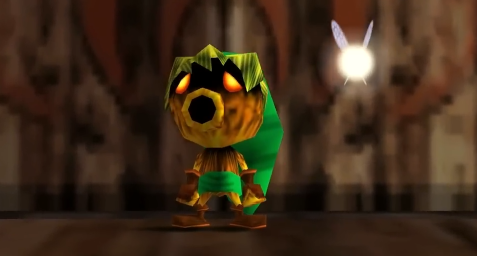
Majora’s Mask (MM) is easily one of the best games in the Legend of Zelda franchise. It’s also one of the few Zelda games to take place outside the Kingdom of Hyrule. The game sees Link leave the kingdom, after saving it from Ganondorf in Ocarina of Time (OoT), in search of the fairy Navi.
Link eventually makes his way to the strange land of Termina, which is perhaps the most intriguing setting and location of any Zelda game thus far. But, as strange as it might sound, there’s some debate about what Termina is.
Zelda fans used to agree that Termina is a parallel universe, which Link stumbles into whilst searching the Lost Woods. This isn’t stated in the actual game. Instead, it comes from the original N64 instruction manual, which describes Termina as “a kind of parallel world.” This was included to explain the visual similarities between the residents of Hyrule and Termina.
Mild Content Warning. This post briefly talks about trauma and loss, which are major themes in the Majora’s Mask story.
Reused Assets, Parallel Universes and Purgatory
Majora’s Mask was made unusually quickly after OoT and, to save on development time, it reuses many of OoT’s assets, including character models. Meaning that the inhabitants of MM’s Termina, though they are different characters, are identical to the inhabitants of OoT’s Hyrule. To add to the confusion, a couple of NPC models, like the Happy Mask Salesman, portray the same character in both games.
The N64 instruction manual refers to Termina as a kind of parallel world to explain the look-alikes. The inhabitants are identical because they’re multiverse duplicates of the same people. For a while, this idea was pretty universally accepted. In the last decade or two, there’s been a couple of other theories about Termina.
Some have argued that Termina is a dream, and others have called it purgatory. The creepy atmosphere, strange events and generally dark tone of the game could be because Link died in the opening segments and is in purgatory. “You’ve met with a terrible fate, haven’t you?” The Happy Mask Salesman tells him at the start.
Death and grief are major themes in the game, which the purgatory theory would explain. Still, I’m not overly convinced by it. From what I gather, the theory harkens back to a Game Theory video, which argues that Link dies in the opening scene. Again, I disagree.
The Link in question also appears in Twilight Princess, as a ghost called the ‘Hero’s Shade’. Notably, the ghost is a distinctly grown-up warrior, not the child Link of Majora’s Mask. What’s more, the Link of Twilight Princess is widely considered to be his distant descendant. So, Link can’t have died in Majora’s Mask; not if he later has descendants.
A Nearby Land?
Alternatively, Termina might just be a neighbouring country to Hyrule. I get the impression, looking through forums, that people often assume this to be the case. It is a reasonable assumption, and many recent players won’t have seen the N64 instruction manual. They probably don’t pay much attention to the reused assets either, or assume it was done to save on development time, which it was.
This was the original intention. In an old interview, Aonuma said that Termina was initially envisioned as just a nearby land. Moreover, the N64 instruction manual only says that it’s a kind of parallel world. A possible implication of which is that it isn’t quite a parallel world. It’s an unclear description.
A few in-game references to Hyrule, meanwhile, indicate that travel between the lands is fairly easy, suggesting that they’re in the same world. Skull Kid is from Hyrule, and presumably and there’s a Goron who talks about the Dodongo Cavern, a location in Hyrule with no Termina equivalent we know of.
It seems pretty clear, I think, that Termina was intended to be in the same world as Hyrule. So it may just be a nearby land, albeit one that the Lost Wood has a portal to. Though it’s hardly beyond the pale that the Lost Woods might teleport you to a different country, when the alternative is the Lost Woods teleporting you to a different universe.
Some discrepancies between Hyrule and Termina, namely Termina’s Moon having an evil and crashing into the surface, can be explained by the game itself. In MM, it’s not really the Moon that’s crashing down, I don’t think; it’s a dark magic creation of the villain Majora. Hence, it disappears when Link defeats Majora.
There are possible in-universe explanations for the identical inhabitants as well, which I’ll get to slightly later.
The Better Story?
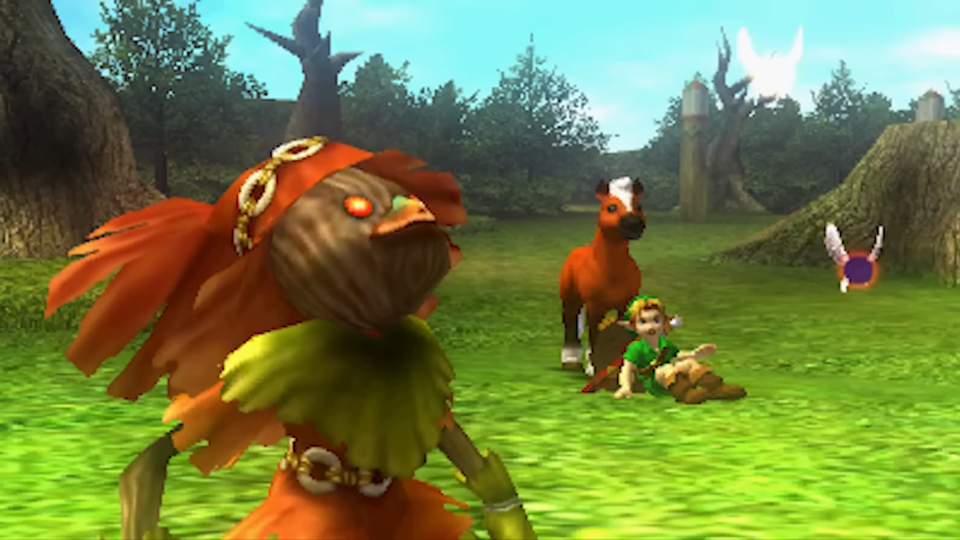
I don’t think Nintendo has an answer to this. Termina might be a parallel universe, as many fans believe. It might also be a nearby land. (I’m convinced it’s not purgatory.) You could make a case for either, and people have. Part of it’s going to be preference, I think. Personally, I prefer Termina being a nearby land. I think it makes for a better story. Hear me out on this.
On the surface, the parallel world and dream explanations may seem more interesting, but casting it as a neighbouring country expands the broader world of Zelda, making it more interesting.
The Legend of Zelda games have no shortage of parallel universes; they show up a lot. They do have a shortage of countries. Nearly every game takes place in Hyrule. The rest of the world is almost never seen. There have been glimpses. The Oracle games introduce Holodrum and Labrynna, Link’s Awakening has Koholint Island, Triforce Heroes has Hytopia and Spirit Tracks has New Hyrule. But of those five, one is a dream (Koholint) and the last two are variations on Hyrule.
So, besides Holodrum and Labrynna, nothing is known about the world outside Hyrule. And I want to know about that world. If there’s a chance Termina might be a neighbouring country, therefore, I’m inclined to lean that way. It makes the world of Zelda feel more expansive. I do have another, more thematic narrative reason for preferring this theory, however, not just world-building.
Majora’s Mask and Trauma
The neighbouring country theory can’t explain why Termina’s inhabitants look identical to Hyrule’s people. The irl answer, as noted, was to save on development time. But there should be an in-universe explanation as well (otherwise, what’s the point in doing fan theories?).
It may be worth noting that Skull Kid and the Happy Mask Salesman never comment on the identical appearances (at least not to my knowledge). Nor do the Gorons, who are implied to have visited Hyrule. So maybe it’s just Link who sees it.
Majora’s Mask is often considered to be a game about trauma. Its dark tone and the focus on grief, which led to the purgatory theory, are part of that. Link is only a kid in the game, and he’s been through a lot. During OoT, he had the fate of Hyrule on his shoulders and saw a lot of people die. Majora’s Mask, it’s been suggested, is about Link dealing with the trauma of that.
The Happy Mask Salesman plays into this idea. In principle, his goal is to spread joy and amusement (happy masks), but his cryptic dialogue often alludes to trauma, and his masks allow people to hide their emotions, literally putting on a brave face.
The identical appearance of Termina’s residence could also play into the game’s trauma themes. The people of Termina don’t look like the inhabitants of Hyrule; Link is just seeing them that way due to the highly traumatic experience he’s been through. He’s seeing the faces of people that, in some cases, he may have seen get killed.
From a narrative standpoint, I’d hazard that Link seeing the faces of people he may have failed to save in Hyrule, as he struggles to deal with his trauma, is a more narratively interesting in-universe explanation for the reuse of NPC assets than the original parallel universe theory.
Final Thoughts
So, partly because it expands on the broader game world, and chiefly because it adds more narrative depth to Majora’s Mask’s themes around trauma, I’m going to say that Termina is a neighbouring country. Not a parallel universe, not a dream, and not purgatory.
I don’t think Nintendo has a definitive answer for what Termina is, and you could make a strong argument for any of the options. But, to my mind, Termina being a nearby land is the most narratively interesting.
-Dexter
 Thoughts and Fiction
Leave a comment