

The return of Susan Foreman explained, with a bit of Doctor Who head canon thrown in.
Spoilers for Doctor Who Series 15.
I love Doctor Who, but to be honest, the most recent series was not great. Ncuti Gatwa was a good Doctor, and there were a lot of cool ideas, but the writing has been fairly lacklustre. I did have high hopes for the return of Russell T Davies as showrunner, but it’s been a letdown.
That said, an element of the new series I have enjoyed (and am very excited about) was the return of Susan Foreman, aka the Doctor’s granddaughter. Susan was one of the show’s first companions in the 60s, alongside teachers Ian and Barbara. In the wider lore, she was the first companion full stop. She was on Gallifrey with the Doctor and was there when he stole the TARDIS (as seen in a flashback during the Moffat era of the show).
References to Susan
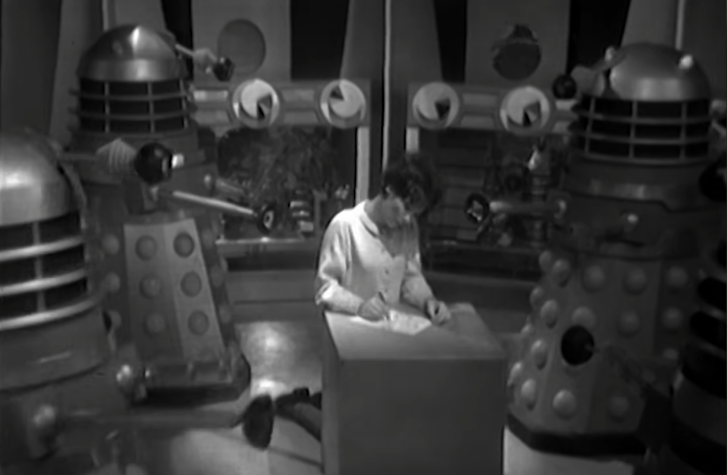
Classic Doctor Who tended to ignore Susan. Most of the show’s lore was worked out after Susan’s actress, Carole Ann Ford, had left. At the time of her appearance, there were no Time Lords, no Gallifrey and no regeneration (Susan does briefly describe their planet, however). It was subsequently never established that Susan was a Time Lord and, while she was occasionally referenced and briefly returned for the 20th anniversary special ‘The Five Doctors’, the classic show constantly shied away from the idea the Doctor had children and grandchildren, which is a shame, because Susan has a lot of narrative potential.
The revived show, New Who, was more willing to explore the idea. It was established during Russell T Davies’ first run that the Doctor’s children had died. There were two notable mentions. In the series 2 episode ‘Fear Her’, the Doctor briefly mentions having been a dad. Later, in the series 4 episode ‘The Doctor’s Daughter’, he discusses their deaths with companion Donna. Stephen Moffat’s era also referenced them. In the series 6 episode ‘Demon’s Run’, the Doctor is asked by Amy if he has children. He doesn’t answer, but it lingers on his silence. Moffat later implies, in the series 8 episode Dark Water, that the Doctor had a wife on Gallifrey as well (it’s claimed that he’s been married four times, only three of which have been seen).
Despite the greater willingness of New Who to acknowledge the Doctor’s family, the show never delved into the implications. Though Moffat’s run did start referencing Susan with ever greater frequency. The 11th Doctor mentions his granddaughter in series 7, and the 12th Doctor has a photo of her in series 10. It was also confirmed, as mentioned, that Susan was with the Doctor when he stole the TARDIS. Subsequently, whenever a new actress was announced or a mystery female character introduced, a huge number of fans (myself included) would speculate that it was either Susan or the Rani, a timelord renegade from the classic show. It was once speculated that Maisie Williams was playing Susan when she appeared in series 8.
Now, at last, Susan really is back and appears to be a key player in Russell T Davies’ second run. She was heavily discussed in series 14 and then, in episode 6 of series 15, finally appeared. She sends a psychic message to the Doctor, telling him to find her. Best of all, she’s being played by her original actress, Carole Ann Ford, who’s been saying for years she’d be willing to return and has appeared in several audio dramas. Amusingly, she returned in the same episode the revealed that Mrs Flood is the Rani, the other classic era character that fans have wanted back for years.
Apparently, the Doctor didn’t listen to Susan’s request, because it does not come up in episodes 7 or 8 (the series finale). In fairness, the Doctor has a lot on his plate during the finale, but still, you’d think they’d mention it. And reportedly were meant to.
Series 15 was structurally flawed
I said at the start that I don’t think Russell T Davies’ second run has been particularly good. I wanted to love it, but it feels rushed, poorly plotted and, at times, too self-indulgent with the lore: despite the alleged desire for a clean slate, they keep bringing back classic characters and squandering them. In the recent finale, for instance, they brought back the classic villain Omega as a CGI abomination that the Doctor defeats in like a second.
There are probably reasons for this. For instance, reducing the series length from 13 episodes to 8 explains the rushed plotting. There isn’t enough time for the combination of episodic monster-of-the-week and serialised storytelling that characterises New Who. They’ve subsequently left ideas underdeveloped and the characters underexplored. Even Ncuti Gatwa’s interpretation of the Doctor feels utilised. He never got any definitive ‘Doctor moments’ where his characterisation could shine, which is a shame because the glimpses we got were amazing.
Likewise, the series 15 finale was, to be blunt, bad. It was poorly paced and included some very out-of-character moments (though the Rani’s scenes were great). But, again, there are reasons for this. For one thing, it’s likely that series 14 companion, Ruby, was meant to be the companion in this series as well. That would explain why series 15 companion, Belinda, did practically nothing. Moreover, Ncuti Gatwa’s decision to leave the show probably necessitated some last-minute rewrites.
Sure enough, it’s been reported that Susan Foreman was meant to have a brief cameo in the finale. But, if I’m completely honest, I’m kind of glad that she didn’t. I want Susan Foreman to return. The character has a lot of potential. But the plans Russell T Davies seemingly had for the character would, in my opinion, diminish that potential.
Russell T Davies’ Plan and Some Personal Head Canon
To recap, in series 14, the Doctor is asked about his granddaughter and says, bizarrely, that he hasn’t had children yet. This is despite the frequent New Who confirmations, discussed above, that he did have children. It’s not unusual for Doctor Who to contradict itself or change the backstory, but it normally happens due to a change of showrunner. It’s a little strange, I think, that Russell T Davies’ second run is contradicting his first run. But I digress. The implication is that Susan’s parents haven’t been born yet.
Then, in the series 15 two-part finale, the Rani creates a wish world in which a brainwashed Doctor has a fictional daughter with companion Belinda (it sounds weird, and it was weird). A key story element is that the Doctor and Belinda fear that the ending wish world will delete their child, which does end up happening. Still, throughout the episodes, I had this sinking suspicion that the child would be revealed as Susan’s future mother.
I disliked that idea for two reasons. First, it contradicts the logic of the episode itself. It’s revealed in the finale that Time Lords are infertile (presumably a reference to some of the old expanded lore). The Doctor having a grandchild in the future, however, undermines this. He already knows that the infertility of the Time Lords won’t last. Alternatively, he may have also put two and two together and deduced that the wish world child is Susan’s mother and would have thus known he can safely end the wish. It seems strange that he never mentioned it.
The second reason is that I think it diminishes Susan herself. The first Doctor was initially portrayed as a grumpy, unreasonable character who greatly disliked humanity. Whereas Susan had an immediate love of humanity and Earth, enrolling in a human school and used a human name. You can square the Doctor’s early grumpiness with his later characterisation, I think, through reference to the implied deaths of the Doctor’s children/Susan’s parents.
My personal head canon is that the Doctor resolved to leave Gallifrey after the bulk of his family was killed in an accident. That’s why the Doctor is grumpy in the early episodes; he’s grieving. Susan, however, managed to move past her loss more easily and embraces exploring and Earth in particular. I reckon that Susan’s love of life and humanity ultimately helps the Doctor to overcome his grief as well. I’d further hazard that Susan is the reason the Doctor likes having companions, and is potentially the reason he started protecting Earth, despite not initially liking it. That is, he protects humanity because Susan wanted him to, and only later began to like Earth.
I’ll admit I have some bias here, but I think my head canon (the last surviving member of his family from his pre-adventure days) is a narratively more interesting premise than the future daughter of the wish world child.
Russell T Davies did not, ultimately, make the wish world child into Susan’s future mother. But, reportedly, that was the original plan. There was supposed to be a cameo appearance of Susan’s actress, Carole Ann Ford, in which she refers to the baby as Mum. Whatever the reason, I’m kind of glad this didn’t happen. Although, I am a little worried that the change of plans could prevent future appearances of Susan.
Final Thought
I am hopeful that in the next series of Doctor Who (assuming there is one, its future seems fairly dicey at the moment), Susan will appear again. And despite my worries, it does seem very likely. I’m hoping, as well, that her parentage won’t be mentioned. In that case, the Doctor’s series 14 mention of future children can be brushed aside as hyperbole (the Doctor lies and all that), and I can continue with my personal head canon. With any luck, series 16 will also feature Susan regenerating, which Carole Ann Ford has said she wants to do, so that the character can be used again in future, even if it’s not for another decade.
-Dexter
 Thoughts and Fiction
Leave a comment